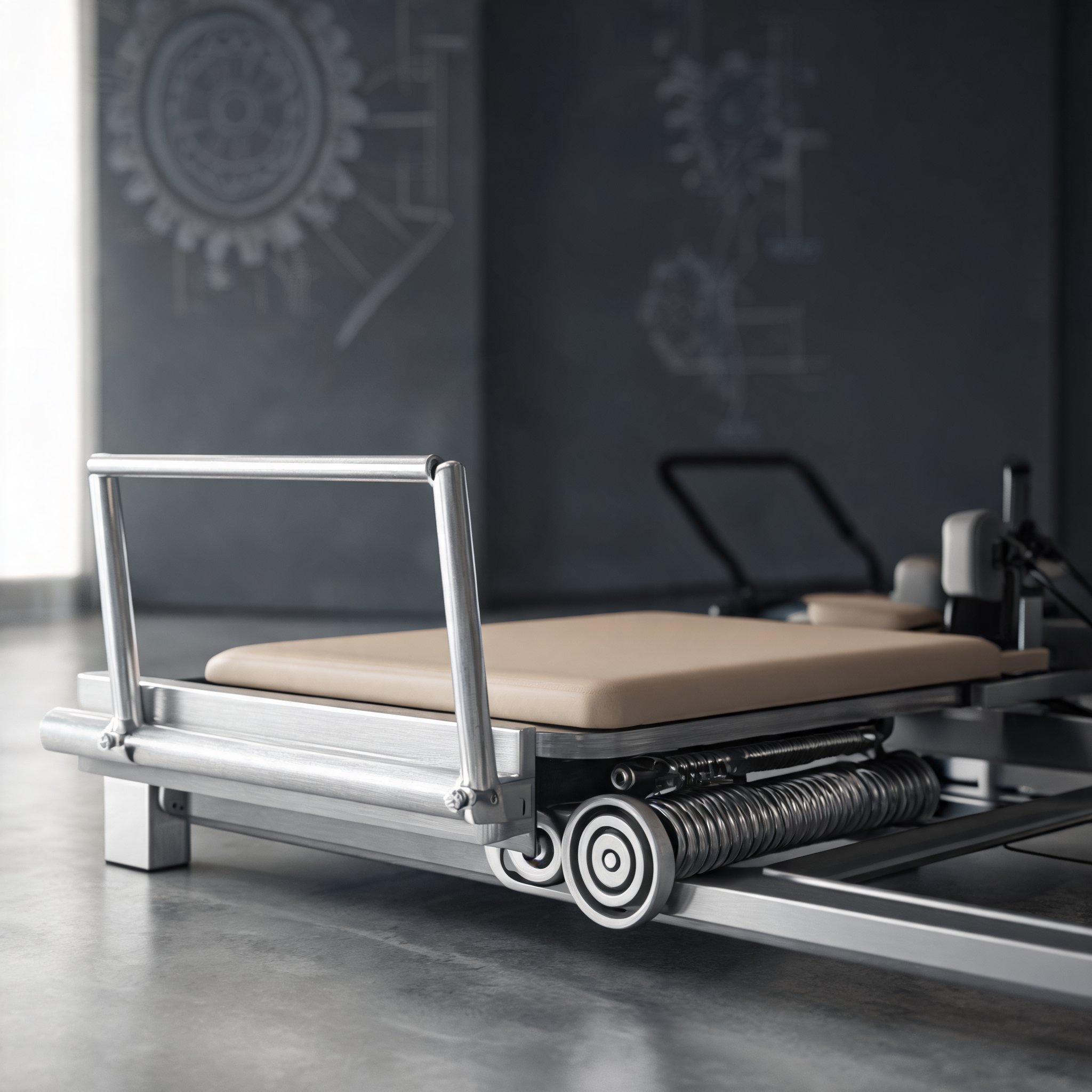
Demand for commercial Pilates equipment is climbing across Europe, North America and the Asia-Pacific, and Shenzhen-based manufacturer RINTELN (Shenzhen Ruiteng Sports Technology Co., LTD) is promoting its basic aluminium reformer series — presented as CE-certified — to studio chains, gym operators and equipment distributors.
The company's positioning addresses a common procurement problem. Buyers comparing machines across exhibition halls and B2B platforms see similar-looking frames but, in RINTELN's account, very different structural engineering underneath. The defects it cites from low-cost units in high-traffic studios include noisy carriage tracking, frame deflection under dynamic body loads, premature spring tension fatigue and rapid roller wheel deformation, all of which interrupt scheduled group sessions and add maintenance cost.
A four-point sourcing checklist
The article sets out criteria it says commercial buyers should verify before issuing purchase orders:
- Safety compliance. Legitimate CE certification, which the article says European import rules and commercial insurance policies require for dynamic load safety and structural integrity.
- Carriage mechanics. Precise linear movement matters; generic industrial bearings and unrefined plastic wheels are said to produce audible track friction, uneven gliding resistance and mechanical lag under heavier users.
- Spring metallurgy. Alloy quality governs long-term resistance stability, since low-grade steel springs are said to lose calibrated tension quickly.
- Supply chain flexibility. Order minimums, frame colour options and lead times determine how easily franchise rollouts and custom studio concepts can scale.
Component and carriage choices
RINTELN, established in 2021, says it builds the basic aluminium line around high-grade anodised aluminium profiles in classic silver and black finishes, aimed at high-traffic group studio floors. Instead of locally sourced generic hardware, the company says it uses German-imported springs for consistent tension profiles and original German sealed bearings to reduce rotational friction.
The company also describes in-house work on carriage noise: an 11-person research team spent 180 days testing material formulations before settling on a silent wheel assembly that combines a high-density, high-tensile polyurethane outer layer with concentric wheel construction. RINTELN says the design reduces vibration, floor drag and track noise at maximum load. These are manufacturer claims about its own design and testing rather than independently verified performance results.
Ordering terms and after-sales
Commercially, the company offers a one-piece minimum order quantity so international buyers can take an evaluation sample, test carriage mechanics and inspect structural finishes before committing to bulk orders. Buyers can select from 60 leather colours for upholstery to match interior schemes, and the factory includes brand customisation at no extra charge — laser logos on aluminium frames plus embroidered logos on wrist and ankle straps. Standard production runs 7 to 20 days, depending on customisation requirements and unit volume.
On total cost of ownership, RINTELN backs the line with a five-year structural warranty and packs high-wear replacement parts alongside the initial machine shipment, with technical support provided through instructional video tutorials for local facility managers carrying out replacements. The article frames this combination of transparent component sourcing and after-sales support as the standard commercial buyers should now expect.