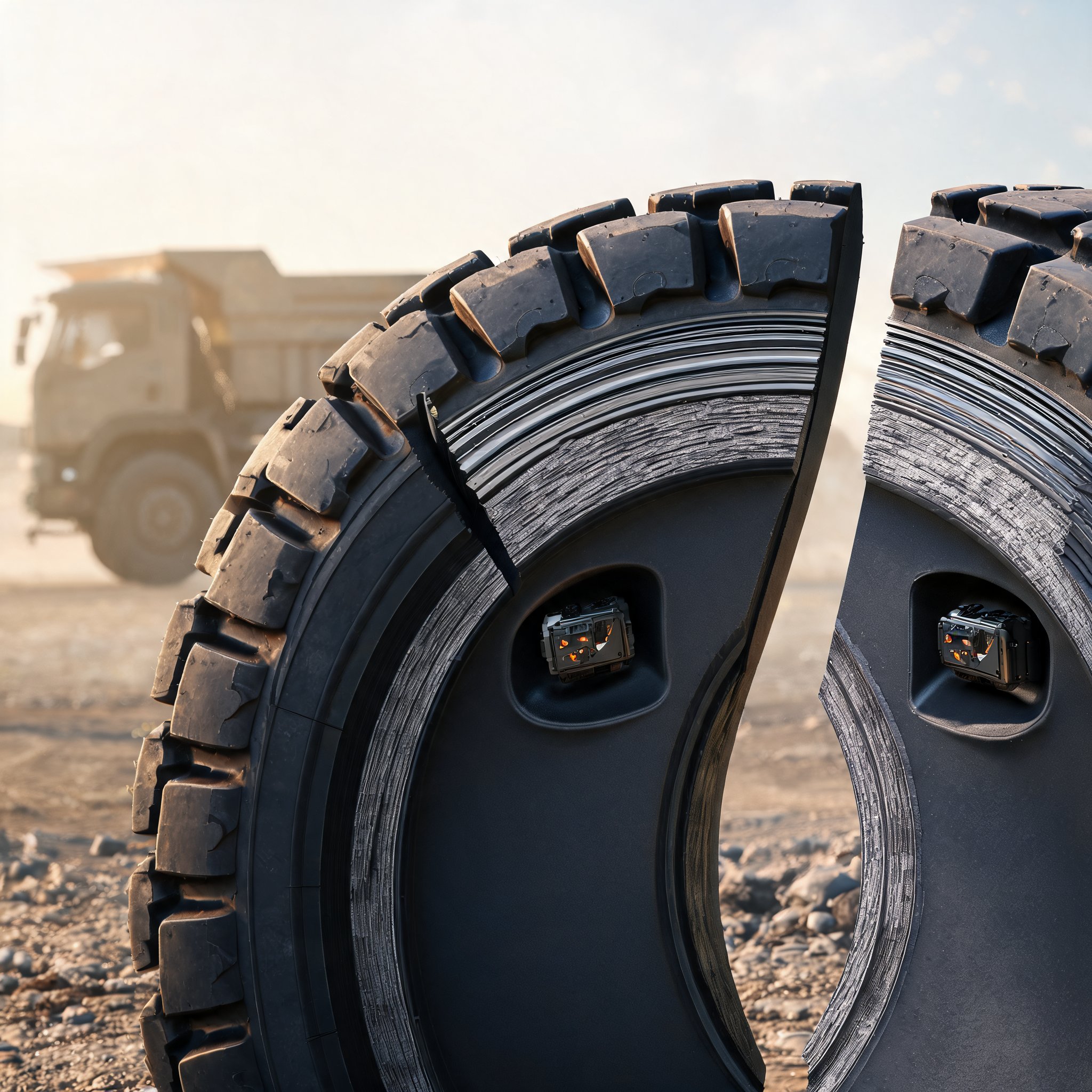
Continental Tires Americas is widening its Sensor Ready tire range with the Conti HSC 3 and Conti HDC 3, both offered in 11R22.5 and 11R24.5 sizes. The company positions the two fitments for demanding construction and mixed-service applications, and the addition builds on its effort to make connected tire technology more accessible across its commercial portfolio.
The central change is a sensor pocket engineered into the tire at the factory. Fleets that wanted sensor data from these products previously relied on manually installed glued sensors. The integrated pocket is meant to make installation faster and more consistent, and to stay serviceable for the whole life of the tire.
Designed for installation and identification
Because the pocket is formed during manufacturing, it removes the need for adhesive-based mounting, according to Continental. A dedicated Sensor Ready marking on the sidewall lets fleets, dealers and retreaders identify compatible tires quickly, which helps when casings have to be sorted by capability.
Renato Sarzano, head of truck tires Americas at Continental, said digital tire monitoring is playing an increasingly important role in helping fleets improve uptime, safety and operational efficiency. Extending the Sensor Ready range to the Conti HSC 3 and Conti HDC 3, he said, makes connected tire technology easier for construction fleets to adopt and helps them get more value from their tire assets.
Retread and monitoring implications
Continental describes the pocket as a factory-engineered feature rather than an add-on, and says it enables faster, more consistent sensor placement than adhesive-based installation. The company also links the design to more efficient tire lifecycle management, since the mounting point does not have to be recreated each time a casing is retreaded.
The design is also meant to carry through later stages of the casing's life. Because the pocket remains part of the casing, retreaders can remove and reinstall sensors without recreating a mounting location or applying new adhesive. Continental says this can simplify retread operations and reduce labor, while keeping monitoring in place across multiple retread cycles.
Tire data reaches fleets through ContiConnect, Continental's digital tire monitoring system. When sensors are paired with it, fleets can access pressure and temperature information. Continental says those readings can help identify maintenance issues before they lead to unplanned downtime, roadside events or premature tire removal.
For construction and mixed-service operations, the pitch is the combination of a pocket that survives retreading and continuous pressure and temperature data. The company frames the expansion as another step toward broader availability of connected tire technology in its commercial portfolio, and toward more efficient tire lifecycle management.