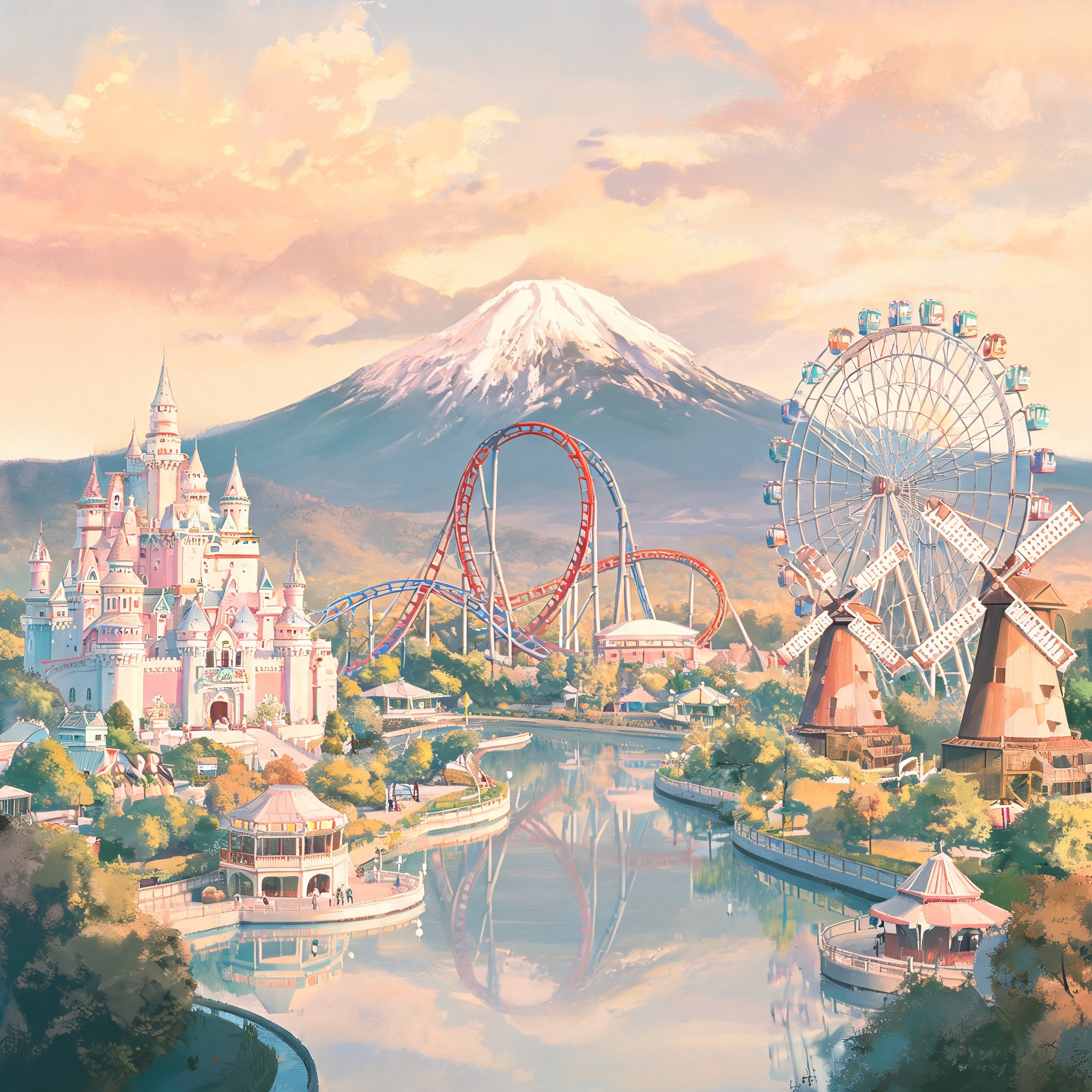
Japan drew a record 42.7 million international visitors in 2025, and its theme and amusement parks are a central part of that appeal. From record-breaking roller coasters to character-driven lands, the country hosts everything from large destination resorts to smaller regional attractions.
Universal Studios Japan and Disney's Japanese resorts
Universal Studios Japan, which opened in Osaka in 2001, features lands based on the Harry Potter franchise alongside Jurassic Park and Minions areas. In 2021 it became the first Universal park worldwide to open Super Nintendo World, and in 2024 it added the world's first Donkey Kong Country area within that land. The park also runs limited-time collaborations with franchises such as Demon Slayer, Jujutsu Kaisen, Pokémon, One Piece and Resident Evil, plus seasonal Sanrio entertainment. In 2026 it announced its first expansion since 2001, with plans to invest up to 300 billion yen in new attractions across 60,000 square metres of nearby land.
Tokyo Disneyland, which opened on 15 April 1983, was the first Disney park outside the United States. It and its companion park, Tokyo DisneySea, are owned and operated by the Oriental Land Company under licence from The Walt Disney Company. In 2026 Tokyo Disneyland announced Space Mountain Earthrise and Sugar Rush: Sweet Rescue as part of a 100 billion yen ($630 million) transformation of Tomorrowland; the new Space Mountain is set to replace the original coaster in 2027. Tokyo DisneySea, which opened in September 2001 and spans 49 hectares, added Fantasy Springs in 2024, a $2.2 billion expansion with worlds inspired by Frozen, Tangled and Peter Pan.
New openings: PokéPark Kanto and Ghibli Park
PokéPark Kanto, described as the world's first permanent outdoor Pokémon attraction, opened in February 2026 at Yomiuriland in Tokyo. The 26,000-square-metre park features more than 600 Pokémon across two themed zones, Pokémon Forest and Sedge Town, along with a parade and two attractions, Pika Pika Paradise and Vee Vee Voyage. Admission also includes entry to Yomiuriland, a Tama Hills amusement park with more than 40 rides whose Bandit coaster reaches 110 km/h and which welcomed around 2.4 million visitors in 2024.
Ghibli Park, inside the Expo 2005 Aichi Commemorative Park, spreads Studio Ghibli film worlds across five themed areas. It opened in November 2022 with three lands, followed by Mononoke Village in November 2023 and Valley of Witches in March 2024. It has no major thrill rides; highlights include a large-scale Howl's Moving Castle recreation and Catbus electric vehicles. In 2026 the park announced plans for a new indoor area inspired by Nausicaä of the Valley of the Wind.
Thrill parks and regional attractions
- Fuji-Q Highland (opened 1968, Fujiyoshida) is known for world-renowned coasters such as Fujiyama, Eejanaika and Takabisha, alongside family attractions and Mount Fuji views.
- Nagashima Spa Land (opened 1966, Mie) has 13 operating coasters, more than any other amusement park in Japan, including the Steel Dragon 2000.
- Huis Ten Bosch (opened 1992, Nagasaki) recreates a Dutch town across about 152 hectares, Japan's largest theme park by area; in 2025 it opened Japan's first premium flying theatre, with an 8K LED dome, and the world's only Miffy area, Miffy Wonder Square.
- Legoland Japan (2017, Nagoya) was Japan's first Legoland and the second in Asia, with Miniland Japan built from more than 10 million Lego bricks.
Smaller and heritage parks round out the picture. Sanrio Puroland, an indoor Tokyo park opened in 1990, centres on Hello Kitty, My Melody and Cinnamoroll. Asakusa Hanayashiki, established in 1853, is considered Japan's oldest amusement park and still operates a roller coaster built in 1953. Hirakata Park, dating to 1910, is Osaka's oldest, with 45 attractions. Others include Moominvalley Park in Saitama, Edo Wonderland Nikko Edomura in Tochigi, Greenland in Kumamoto, Sanrio Harmonyland in Oita and Sylvanian Park in Ibaraki.