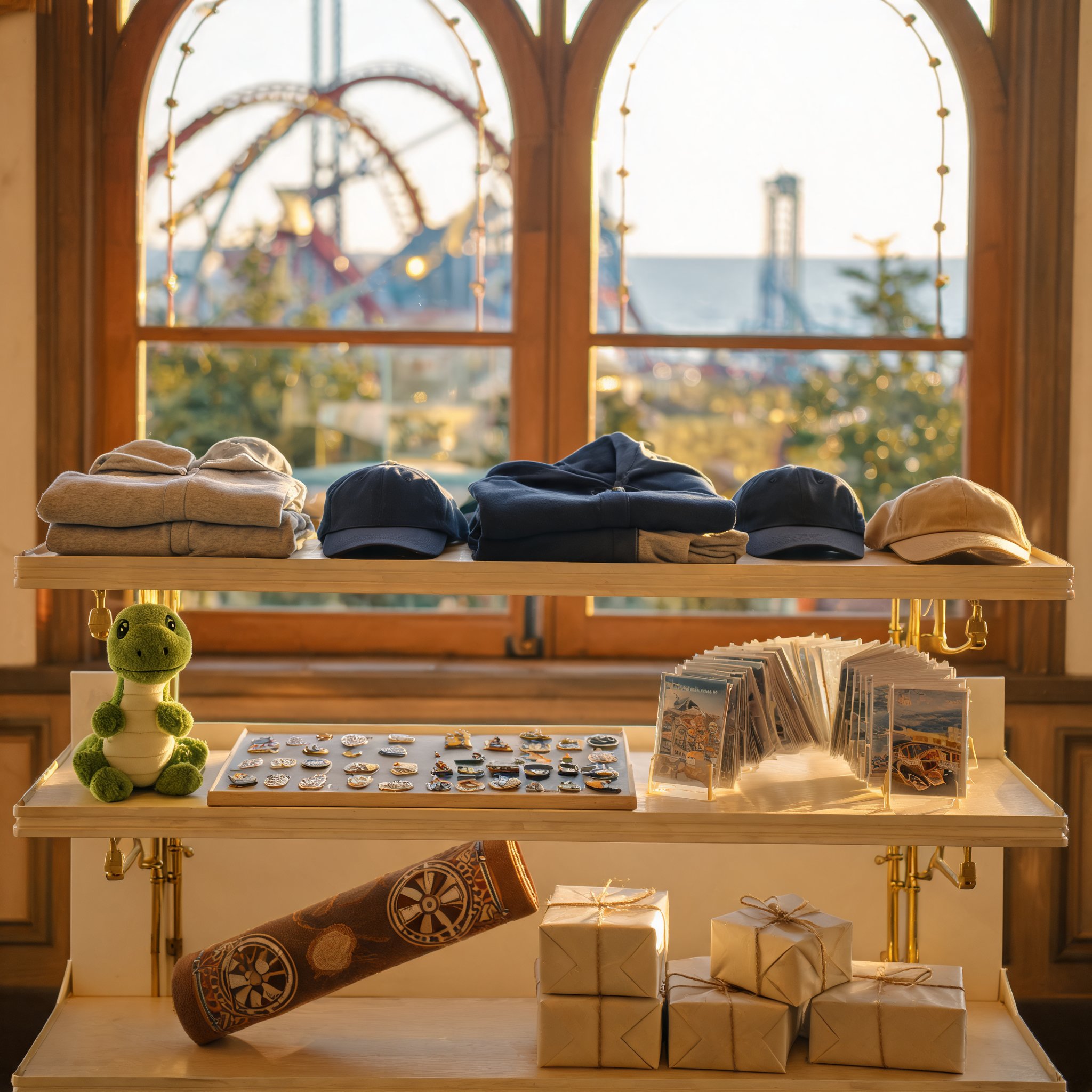
Pleasure Beach Blackpool is known for its traditional seaside amusement park atmosphere, wooden roller coasters, the Big One and its shows. Less visible, but central to the resort’s offer, is a retail operation that its head of retail, Damian Jackson, describes as a way to turn the park’s excitement, heritage and personality into products guests can take home.
Jackson oversees physical stores, e-commerce, ride photography and merchandise development. The flagship shop sits at the main entrance in the Casino building, supported by outlets across the site. He works closely with Amanda Thompson from the initial idea through design brief, product development, sampling and final approval. The guiding principle, he says, is that every range must have a reason for existing, a clear customer and an authentic connection to the resort rather than simply carrying a logo.
Designing for a mixed audience
Pleasure Beach serves families on first visits, school groups with limited spending money, teenage friends and couples, international tourists, lifelong fans and serious coaster enthusiasts. A family may want a traditional souvenir, while an enthusiast may seek an accurate collectable tied to a particular ride. Teenagers may respond to confectionery, accessories and trend-led apparel, while heritage-minded guests value nostalgia and craftsmanship.
Jackson says the resort combines commercial data with direct observation and guest feedback. Sales reports show what is selling; time in shops, conversations with teams and listening to guests help explain why. The team asks whether a product would be worn away from the resort, displayed proudly by an enthusiast, welcomed by a child or genuinely remind a family of its visit.
A carefully edited range
The portfolio is built around different customer missions and price points. It includes impulse purchases such as confectionery, magnets, keyrings and badges; practical items such as bottles, bags and ponchos; fashion-led apparel and accessories; children’s products and plush; and premium or limited-edition pieces for collectors. Attraction-specific merchandise sits alongside broader Pleasure Beach branding, licensed ranges, playful products and heritage collections.
Jackson cites Aviktas as an example of developing merchandise alongside a new attraction. Instead of applying the ride logo to a set of products, the range was built around the attraction’s visual world: its golden snake, emerald colouring, mythology and sense of mystery. Retail was involved early, which Jackson says makes merchandise strongest. A run of 50 models priced at £250 each sold out, showing demand for premium collectables when authenticity, detail and connection are strong.
Heritage, licensing and everyday operations
Different attractions require different approaches. ICON lends itself to a clean, contemporary, fashion-led treatment, while heritage rides such as the Big Dipper and Grand National draw on archive artwork, engineering details and generations of memories. Quality checks cover materials, colours, proportions, trims, embroidery, packaging and shop presentation, alongside commercial questions about demand, pricing, quantities and lead times.
Nostalgia is important because the resort represents generations of family memories. Pleasure Beach reinterprets archive imagery, typography, posters and architecture for modern apparel, homeware and collectables, while playful assets such as Mr Funshine add humour and colour. Licensed partnerships, including Nickelodeon and Aardman’s Wallace and Gromit, require collaboration with IP owners and approved suppliers. Jackson says relevance and exclusivity help the shops compete with online retailers.
Guests increasingly want exclusive, authentic and considered products, including attraction-specific merchandise, premium apparel, subtle branding, limited editions and items with a story. Generic souvenirs remain important, but their design and presentation must evolve. Operationally, stock accuracy and availability are critical: deliveries, replenishment, pricing, signage and daily compliance checks protect the guest experience.
Retail is also treated as part of the visit. Presentation, storytelling, price architecture and product adjacencies encourage trade-up, while themed environments, demonstrations, confectionery experiences, personalisation and ride photography make shopping entertaining. E-commerce extends the relationship year-round, and staff act as hosts, storytellers and brand ambassadors. Pleasure Beach looks to museums, heritage destinations, premium fashion brands and experiential retailers for inspiration, but Jackson says the aim is to create products guests associate only with Pleasure Beach.