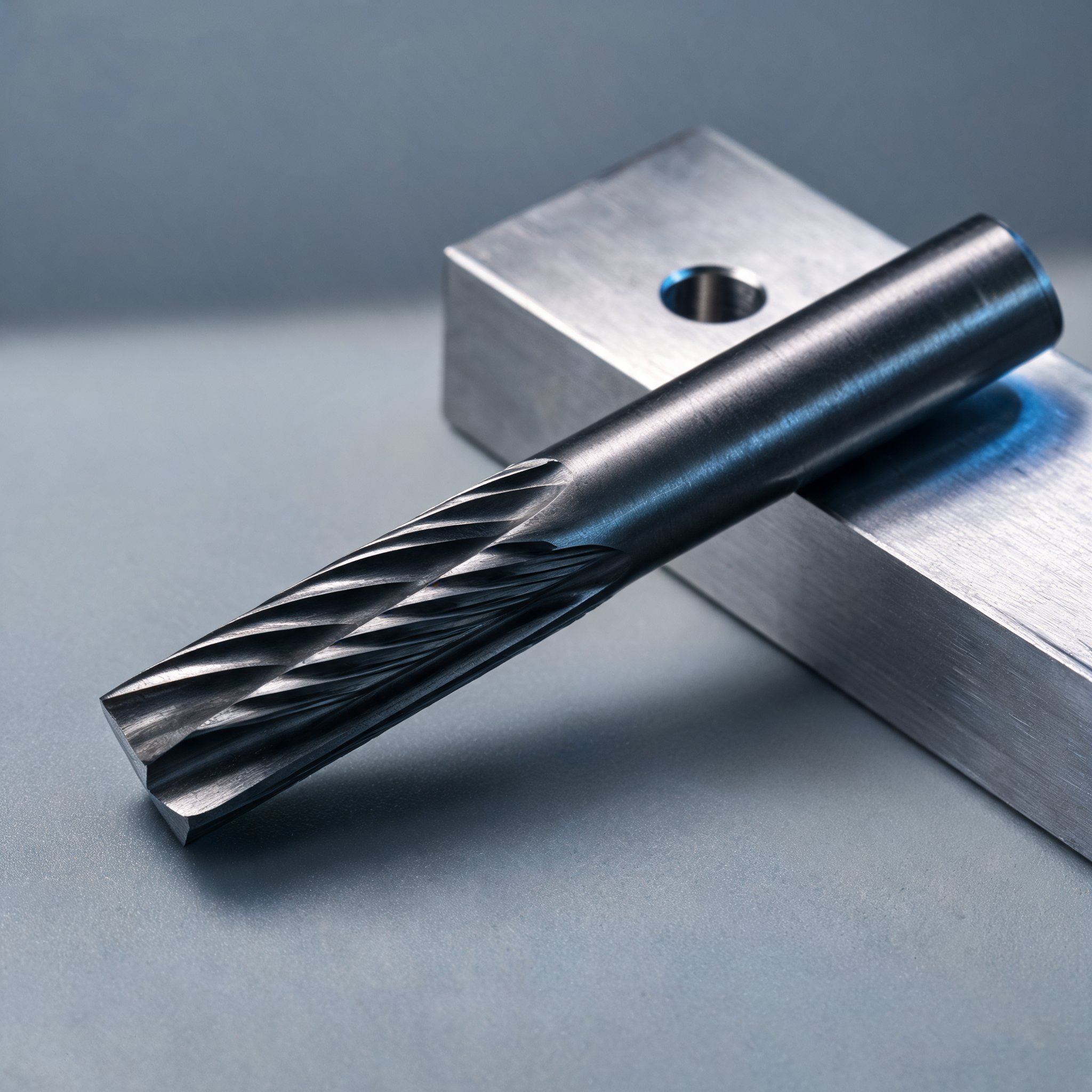
Seco has added S-Ream Core to its reaming portfolio, a solid carbide range intended for reliable and cost-efficient general-purpose reaming in P, M, K and N materials. The company positions the line between basic tooling and its high-performance Nanojet solutions, targeting everyday production where dimensional accuracy matters but a premium tool may be more than the application requires.
According to Seco, the range is designed to deliver consistent hole quality, predictable tool life and a low cost per hole. A streamlined geometry, standard inspection and a single universal coated grade are intended to reduce complexity while supporting repeatable IT7 precision. Seco presents these as design objectives for the range.
The tools feature straight flutes and a 30° lead. Seco stocks 62 diameters from Ø1.461 mm to Ø11.960 mm (0.057 in to 0.470 in), and additional sizes can be obtained through its MyDesign service. The range sits in a three-tier reamer portfolio—Core, Plus and Max—that the company says is meant to make tool selection clearer and more application-focused.
S-Ream Core is aimed at production operations that need repeatable hole geometry without moving to a high-performance reaming system. Its introduction expands Seco’s offering at the general-purpose end of the reaming line while keeping the selection structure tied to application needs.