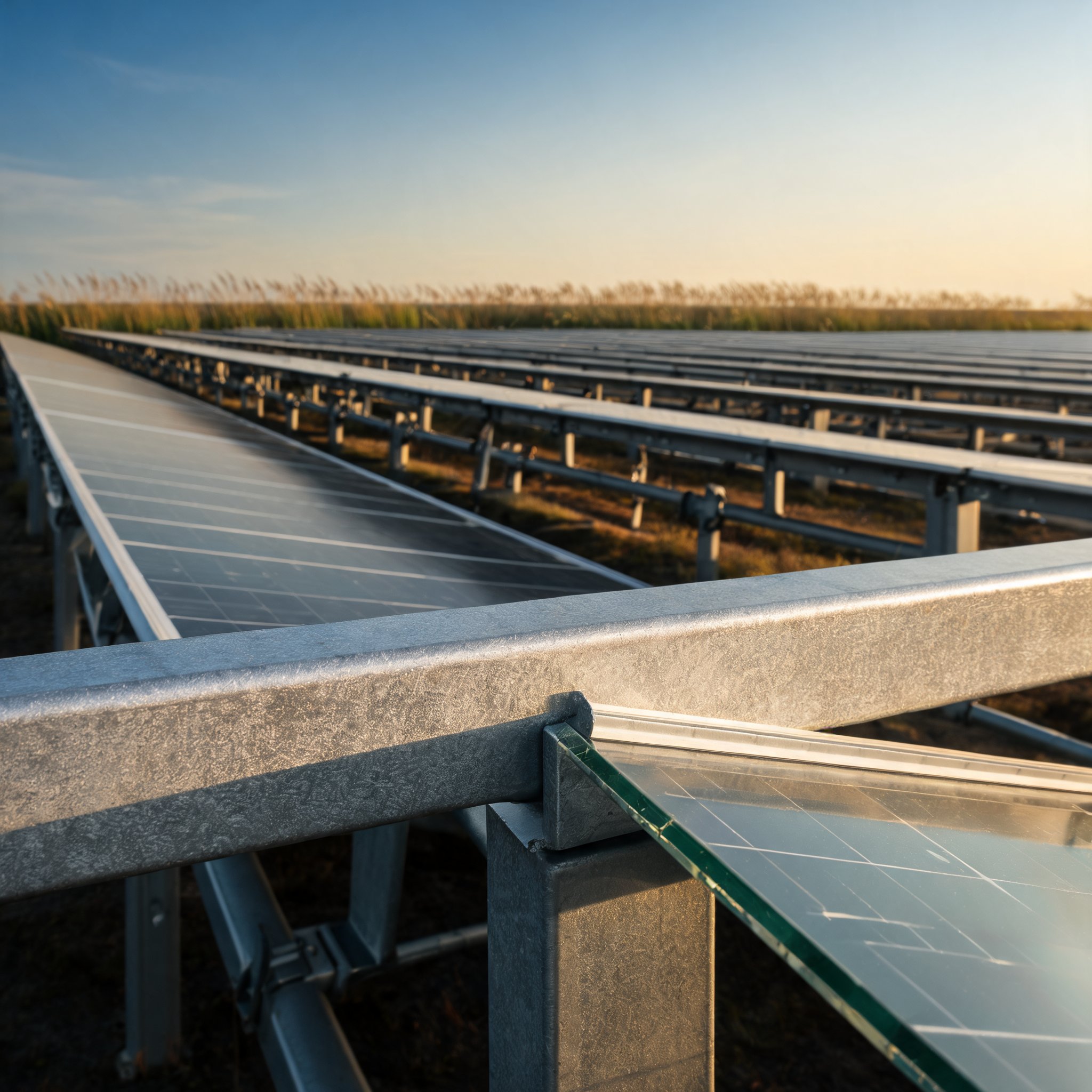
Thornova Solar, a solar module manufacturer, and Nextpower, a supplier of solar trackers and structural solutions, have signed a Master Supply Agreement that formalizes and extends their existing commercial relationship. The companies announced the agreement during RE+ 2026.
Under the arrangement, modules that Thornova Solar produces in the United States will be paired with steel frame technology manufactured domestically by Nextpower. Both companies present the combination as a way to help developers of utility-scale and commercial and industrial (C&I) projects reach higher domestic content levels while improving how modules behave structurally.
What the pairing is intended to address
According to the two companies, fitting Nextpower steel frames into selected Thornova module series targets two priorities that have grown more prominent in the U.S. market: maximizing domestic content and making modules more resilient under demanding environmental conditions.
The companies list four expected benefits:
- Domestic content. The pairing is intended to help customers reach higher domestic content levels and meet project-specific requirements.
- Structural performance. Steel frame integration allows up to 125% higher allowable panel loading in tracker applications, according to the companies.
- Durability. The companies cite improved resistance to uplift, deflection and glass breakage.
- Simpler integration. Optimized mounting hardware is said to reduce balance-of-system requirements.
Thornova and Nextpower position the offering for projects in physically demanding U.S. locations, specifically the high-wind regions of the Midwest and Southeast, where structural reliability and long-term module performance weigh heavily in design decisions.
Company comments
Andrea Bodenhagen, global marketing director at Thornova Solar, described the signing as an important step in strengthening the relationship with Nextpower and in expanding the value the company delivers to U.S. customers. She said that bringing together domestically made modules and domestically manufactured steel frame technology helps customers increase domestic content while gaining stronger, more resilient modules, and characterized the arrangement as the kind of collaboration needed to advance a competitive U.S. solar manufacturing ecosystem.
Jenya Meydbray, vice president and general manager at Nextpower, said the company is looking forward to deepening the collaboration and bringing modules featuring its domestically manufactured steel frames to the U.S. market. He pointed to NX CoreFrame as an opportunity to advance module strength and reliability, citing industry challenges such as glass breakage and demanding environmental loads, and said the product is intended to give solar developers and owners greater confidence.
Both companies said the agreement reflects a shared commitment to strengthening domestic manufacturing and to delivering solutions that respond to evolving technical and commercial requirements in the U.S. solar market. The announcement did not include contract volume, pricing, delivery schedules or the specific Thornova module series that will carry the Nextpower frames.