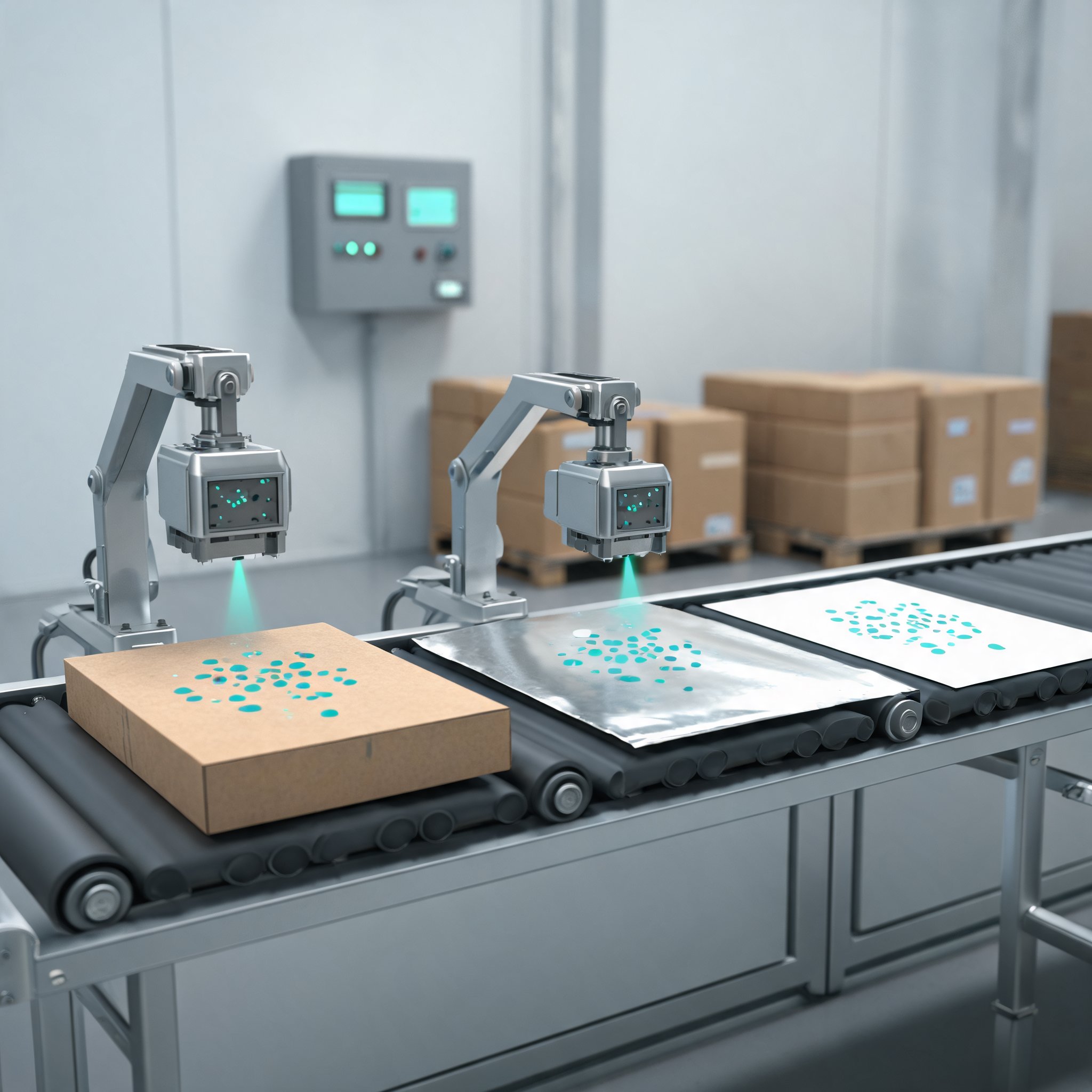
Videojet Technologies has launched two thermal inkjet (TIJ) printers, the Videojet 8530 and the Wolke m620 touch, designed to print high-resolution codes on boxes, cartons, foil, labels and other packaging across a range of industries.
According to the company, both systems produce clear, fast-drying 2D codes at item and case level, including QR and DataMatrix codes, lot numbers, expiration dates, logos and other variable data, with print resolutions of up to 600 x 600 dpi.
The printers are intended to deliver consistent code quality and readability across different applications, aimed at fast-moving packaging environments where reliable operation, intuitive use and straightforward integration matter. Target sectors named by Videojet include cosmetics, food, beverage and electronics.
Videojet positions the Wolke m620 touch specifically at pharmaceutical and medical device manufacturers. The model is described as offering high-resolution traceability codes, highly readable barcodes and fast data processing for demanding serialization applications. Its validation package is designed to support compliance with GAMP requirements.
Both printers are built to fit into existing thermal inkjet environments and support standard communication protocols, which the company says should simplify upgrades and reduce engineering effort. They use solid-state designs with no moving parts, an approach intended to minimize maintenance, support production uptime and allow clean, no-mess operation.
The Videojet SIMPLICiTY user interface includes Code Assurance features. Built-in rules and validation controls are designed to reduce coding errors, improve code accuracy and cut unnecessary interaction with the printer. A leader/follower configuration extends print capability by allowing multiple printheads and controllers to work as a coordinated system.
Both models draw on Videojet software and digital tools, including VRS Remote Service, CLARiSUITE print job management software and the Velicity Design and CLARiSOFT label design tools. The company expects these to help manufacturers improve message accuracy, simplify job management and keep greater control over coding operations.
Marcy Vanderbei, global product manager for Videojet Technologies, said manufacturers need coding technology that keeps pace with production while helping protect product quality, traceability and operational efficiency. She said the new TIJ printers were designed to simplify high-resolution coding with systems that are easier to integrate, easier to operate and easier to rely on, shift after shift.
The launch follows Videojet's 1880 C continuous inkjet printer, which the company says is expected to reduce cleaning, service calls and unpredictable downtime in pigmented CIJ printing while delivering bold, high-contrast codes with operation and maintenance similar to a dye-based printer. Separately, Domino Printing Sciences has introduced the Domino Cx150i, a direct-to-box piezo inkjet printer that codes onto porous substrates using ink made from vegetable oil, aimed at secondary packaging in food, beverage and general manufacturing.